

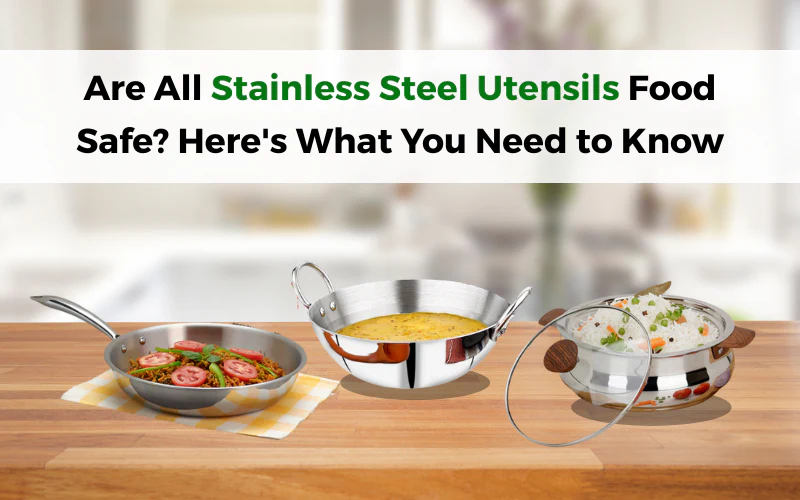
When it comes to cooking and serving food, safety should always come before style, trend, or convenience. We cook, serve, and store food every day, but rarely think about how the utensils we use can affect our health. The type of utensils you use plays a huge role in keeping your food healthy and hygienic. Among the many materials available today, stainless steel utensils have earned a trusted place in almost every kitchen. From pots and pans to spoons, plates, and storage containers, stainless steel has earned its reputation not just for durability and elegance, but also for keeping our food safe, hygienic, and uncontaminated. They are known not only for strength and beauty but also for keeping our food safe and hygienic. In a world where people are becoming increasingly conscious about health, stainless steel utensils play a remarkable role in ensuring food safety every single day.
Why Stainless Steel Is Different
Stainless steel is not just normal metal. It is a combination of iron with a mix of chromium, nickel, and other elements. What makes it unique is the protective chromium layer that forms on its surface. The presence of chromium forms a protective layer on the surface, making it resistant to rust, corrosion, and staining. This layer prevents rusting, m
corrosion, and reaction with food. That means your food stays natural, pure, and free from contamination. Unlike other materials, stainless steel does not break down easily, does not absorb food particles, and does not react with most foods. This is one of the biggest reasons why professional chefs, home cooks, and health experts trust stainless steel utensils.
How Stainless Steel Ensures Food Safety
- Non-Reactive and Hygienic Material
One of the biggest advantages of stainless steel is that it is non-reactive. This means they do not react with acidic foods like tomatoes, lemon, tamarind, vinegar, or spicy curries. When such foods are cooked in materials like low-grade aluminum or copper, they may react and release harmful particles into the food.
Stainless steel does not do that.
Stainless steel is extremely easy to clean. A simple wash with soap and water removes dirt, grease, and bacteria. Stainless steel is extremely easy to clean. A simple wash with soap and water removes dirt, grease, and bacteria. Even when heated, this protective layer stays strong, which makes stainless steel far safer than many other cookware materials. Unlike wooden utensils that absorb moisture or plastic that gets scratched and holds bacteria, stainless steel remains smooth and hygienic for years.
- Easy to Clean and Maintain
Another key reason stainless steel promotes food safety is its ease of cleaning. They do not absorb oils, odors, or food particles, preventing bacterial growth. With proper washing using mild soap and water, stainless steel ensures that no harmful residue stays behind.
Benefits include:
- Easy to wash
- Less likely to grow bacteria
- No retention of odors or stains
- Resistance to discoloration
Unlike plastic that can develop scratches or wood that absorbs moisture, stainless steel stays hygienic and clean-friendly.
- Rust and Corrosion Resistance
Rusty utensils can contaminate food and cause serious health risks. Stainless steel is specially designed to resist rust and corrosion due to its chromium layer. Whether you use them for boiling, frying, storing, or serving, they remain safe and strong for years. Even with daily washing and constant use, stainless steel:
- Does not rust
- Does not corrode easily
- Does not peel
This makes stainless steel not only hygienic but also long-lasting, reducing the need for frequent replacements.
- Heat Resistant and Safe for High-Temperature Cooking
Cooking often involves high heat, and not all materials can handle it safely. Stainless steel is heat-resistant and does not melt, burn, or release harmful fumes Unlike non-stick pans that may release harmful fumes if overheated, stainless steel remains safe and maintains its integrity, protecting both your food and your health.
Benefits include:
- Safe deep frying
- Cooking on gas or induction stoves
- Even heat distribution in high-quality SS cookware
- Pressure cooking.
Many people use stainless steel containers to store food, and for good reason. Stainless steel containers keep food fresh without absorbing smell, color, or taste. They keep food fresh, protect it from environmental contamination, and help prevent spoilage. Stainless steel is not only good for cooking — it is perfect for storing food too. Whether storing leftovers, milk, spices, or cooked meals, stainless steel ensures safe preservation.
They are perfect for storing:
- Leftovers
- Cooked meals
- Snacks
- Milk
- Dry food
- Spices
They protect food from air exposure.
- Environmentally Friendly and Sustainable
Food safety is not only about what happens inside the kitchen; it is also connected to environmental health. Stainless steel is eco-friendly and recyclable. Unlike plastic containers that harm the environment and indirectly affect human health, stainless steel contributes to a safer planet. Choosing stainless steel means choosing a safer planet and a healthier life. Using stainless steel utensils is a responsible choice for both personal health and environmental protection.
- Prevents Food Contamination
Food contamination can happen when utensils crack, chip, or peel. Stainless steel utensils are strong and sturdy. Their smooth, non-porous surface prevents bacteria and germs from getting trapped. They do not break easily and have a smooth surface that does not trap bacteria.
This reduces:
- Germ growth
- Food poisoning chances
- Risk of infection
This significantly reduces the chances of foodborne illnesses, making stainless steel a trusted partner in maintaining kitchen hygiene.
- Supports Long-Term Health
Since stainless steel prevents contamination, avoids toxic exposure, and maintains food purity, it indirectly supports long-term health.Stainless steel helps prevent chemical exposure, reduces contamination risk, and maintains the real purity of food . Investing in stainless steel utensils is like investing in your family’s health and safety. Stainless steel cookware and utensils help reduce long-term exposure to harmful chemicals, toxins, and contaminants that may slowly enter the body through unsafe cookware. Stainless steel is completely free from toxic coatings and harmful chemicals, meaning no unwanted substances mix with your meals. But true food safety is not just about today; it is also about protecting our health in the long run. This helps protect your family’s long-term health in a simple yet strong way.
Conclusion
Stainless steel utensils are far more than just shiny kitchen tools — they are silent guardians of food safety and everyday health. Their durability, hygiene, non-reactive nature, chemical safety, and resistance to corrosion make them one of the safest materials for cooking, serving, and storing food.
In a time where health awareness is more important than ever, choosing stainless steel is not just a cooking decision; it is a lifestyle decision. It ensures that every meal you prepare is not only delicious but also safe, clean, and healthy
